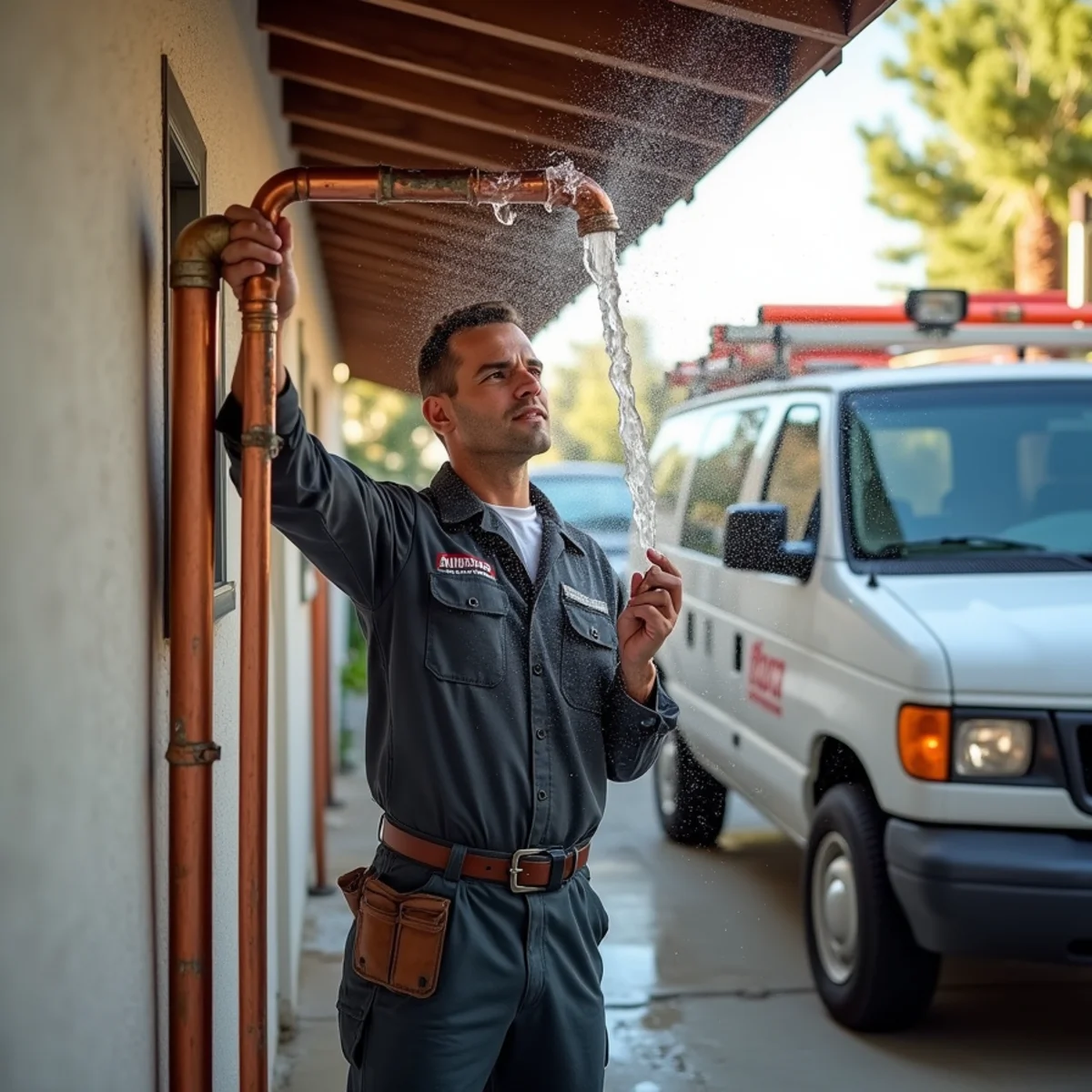
The first 30 minutes of a plumbing emergency decide how bad the damage gets. Here’s the exact San Marcos action plan — shut off, protect, document, and call.
A plumbing failure doesn’t wait for a convenient moment. A burst supply line, a sewage backup, a gas concern, or a failed water heater can turn a normal San Marcos day into a safety and property-damage problem in minutes — and water moves behind walls and under flooring long before a visible puddle looks serious.
What you do in the first 30 minutes matters more than almost anything else. This guide walks through the exact steps, in order, so you can limit the damage before our technician arrives.
The short version: shut off water or leave the property for a gas concern, protect people from electrical and sewage hazards, document the damage, and call. Do not delay an active emergency to compare prices.
Step 1: Stop the water at the source
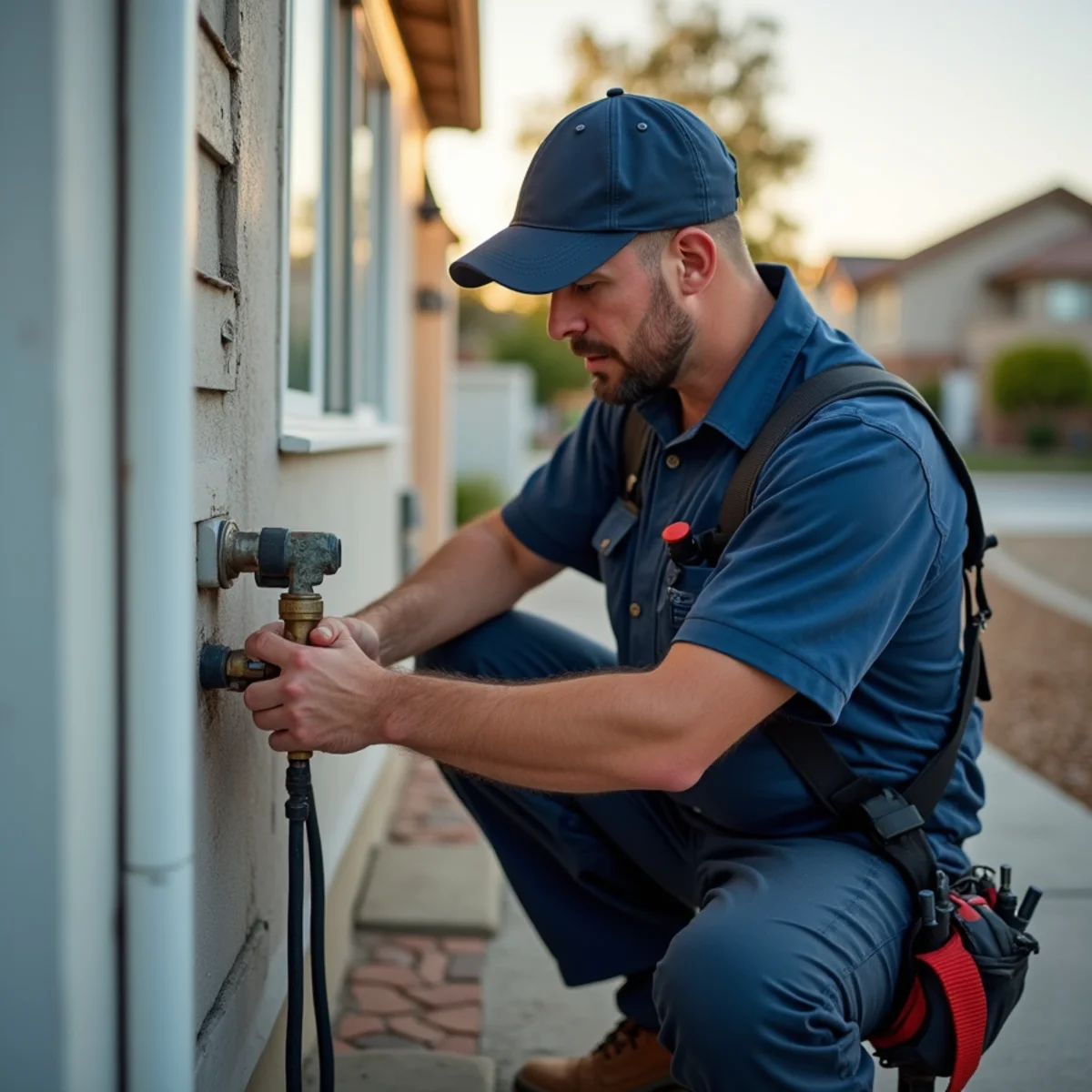
For an active water leak or burst pipe, close the nearest fixture shut-off valve first if it’s accessible. If water keeps coming, close the home’s main water shut-off — usually located near the water meter or where the main line enters the house. If you don’t know where yours is, this is the moment you’ll wish you did, so ask us to label it during any future visit.
One critical safety rule: never step into electrically unsafe standing water to reach a valve. If water has reached outlets, appliances, or the electrical panel, keep everyone away and call an electrician or 911.
Step 2: Protect people before property
- Move people, pets, and undamaged belongings away from the affected area when it’s safe.
- Keep everyone clear of standing water near outlets, panels, or extension cords.
- For a sewage backup, stop using every connected fixture and keep children and pets away from the wastewater.
- For a suspected gas leak, leave the property and call the gas utility or 911 from a safe location — do not flip switches or search for the source indoors.
Step 3: Document before cleanup
Before you start mopping or moving things, take wide and close photos of the source and the affected rooms, note the time, and save any failed component when it’s safe to remove. This record protects you: EPA guidance recommends drying water-damaged materials within 24–48 hours to reduce mold risk, and your insurer will want documentation before anyone begins demolition or drying.
Step 4: Call and describe the situation clearly
When you call, tell the dispatcher where the water started, how fast it’s moving, whether the main supply is closed, and any safety concerns. That information helps us bring the right equipment and confirm the fastest available response. From our central San Marcos base, we reach most North County addresses quickly — including Escondido, just 15 minutes east on SR-78.
Know your shut-offs before the next emergency
The single best thing you can do today is find and label your main water shut-off and your water heater’s shut-off. In an emergency, seconds count, and a labeled valve turns panic into a quick, decisive action that can save you thousands in damage.
What our dispatchers do the moment you call
On a real emergency, the first 60 seconds on the phone matter as much as anything. Our dispatcher isn’t reading a script — they’re getting you to the right valve. They’ll ask where the water is coming from, whether it’s clean or sewage, whether anyone is near standing water and electrical, and whether the main is already off. That triage tells the technician what to bring and lets us route the closest crew, which is why we dispatch from San Marcos rather than a call center two counties away.
The single biggest mistake we see is homeowners hunting for the exact failed pipe while gallons keep pouring. Don’t. Kill the main, protect people, photograph, and call. The pipe can wait ninety seconds; the water damage can’t.
Frequently Asked Questions
Stop the water and call the plumber first for an active emergency — the priority is limiting damage. Document everything with photos, then contact your insurer before any non-emergency demolition or drying begins.
Look near the water meter or where the main line enters the home, often in the front yard, garage, or an exterior wall. If you can’t locate it, close individual fixture valves and call us — we’ll guide you and label the main during the visit.
Faster than most people expect. Water wicks into drywall, baseboards, and subfloor within minutes, and EPA guidance puts the mold-risk window at 24–48 hours. That’s why stopping the source and starting drying quickly matters more than getting the perfect repair on the first hour.
If water has reached outlets, appliances, or the electrical panel, keep everyone away and cut power at the breaker only if you can reach it safely and dry — otherwise call an electrician or 911. Never step into electrically unsafe standing water to reach a plumbing valve.
Related Services & Areas
North County Pro Plumbing of San Marcos
Licensed C-36 plumbing contractor (CA CSLB #1122334 · C-36 Plumbing) serving San Marcos and North County since 2009. This guide is for general information — for a diagnosis specific to your home, call (831) 290-4327.