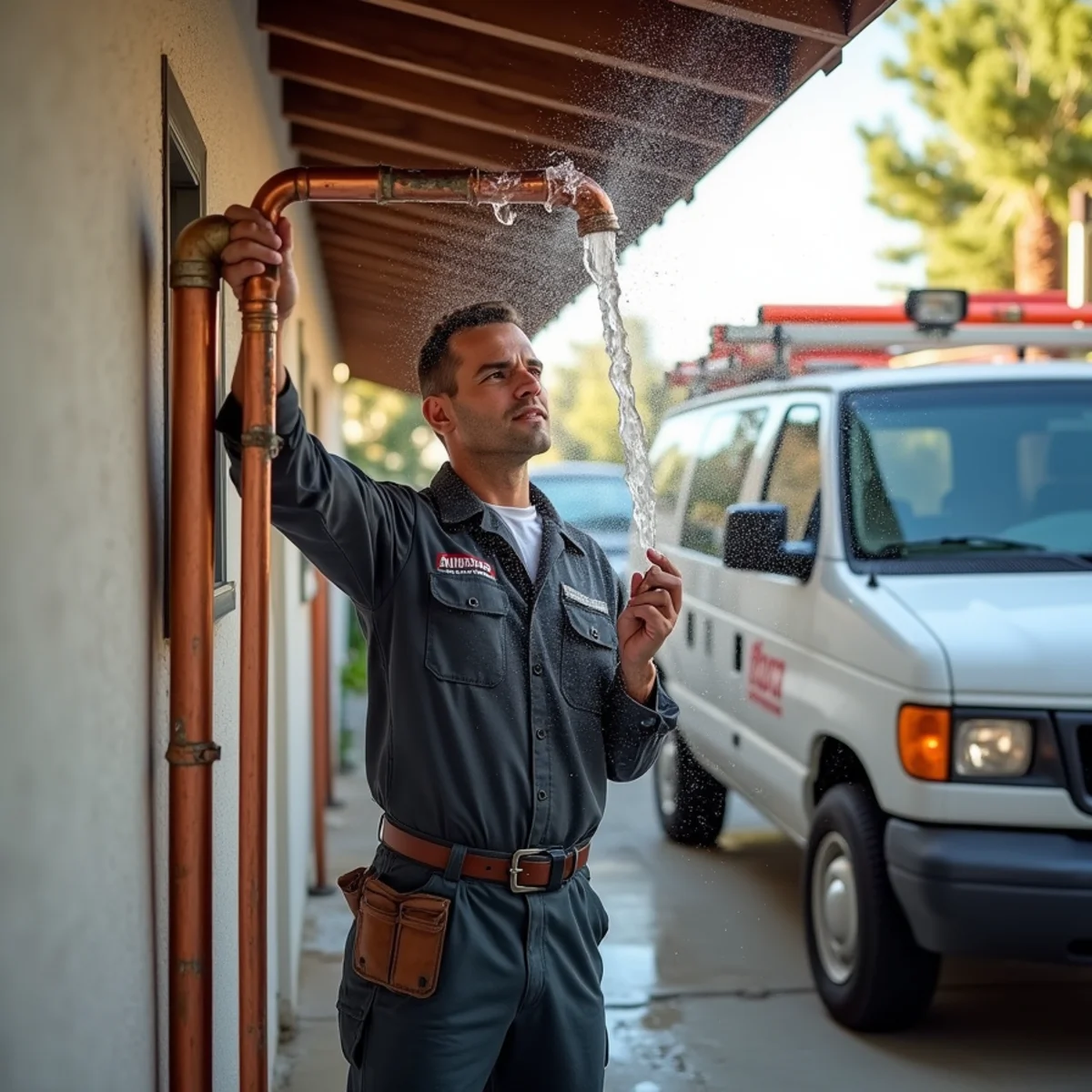
Atmospheric-river storms overwhelm aging sewer lines. Here’s how to respond safely to a storm-driven sewer backup in North County.
When atmospheric-river storms roll through San Diego County, low crossings flood along San Marcos Creek and Twin Oaks Valley Road — and aging sewer lines can get overwhelmed. The result inside a home is a sewer backup: contaminated water rising at the lowest fixtures, tubs, showers, and floor drains.
A sewer backup is a sanitation emergency, not a routine clog. Stop using connected fixtures, keep people and pets away, and treat the water as hazardous.
Step 1: Stop adding water
The instant you see wastewater backing up, stop using every connected fixture — no flushing, no sinks, no laundry, no dishwasher. Each use adds to the backup. During a storm, the system may already be saturated, so reducing demand is the most important immediate step.
Step 2: Keep everyone away from the water
Sewage is Category 3 water — it can carry bacteria and pathogens. Keep children and pets out of the affected area, avoid direct contact, and don’t try to mop it up yourself. If contaminated water is spreading, containment and professional sanitizing are the safe path.
Step 3: Separate stormwater from sewage
- Note whether the water is clear stormwater or sewage-contaminated — it changes the cleanup approach.
- Photograph the affected areas before anything is moved or cleaned.
- Keep the technician’s access path to cleanouts and fixtures clear.
- Record when it started and whether it’s getting worse.
Step 4: Call for emergency clearing and diagnosis
We answer 24/7 and prioritize active-water and sewage calls during storms. We clear the blockage to stop the intrusion, then run a sewer camera to find why it happened — roots in the lateral, an offset or collapse in aging clay and cast-iron lines near the lake and Mission Road, heavy buildup, or storm infiltration overwhelming a marginal line.
Preventing the next storm backup
If your home backs up every storm season, the underlying line likely needs attention. A camera inspection during dry weather can reveal roots, cracks, or bellies that let stormwater infiltrate. Addressing them — with cleaning, lining, or repair — is far cheaper than repeated emergency cleanups. Homes in Carlsbad and across the coastal corridor with mature trees over old laterals are especially prone.
Why storm season overwhelms marginal lines
A sewer line that’s “fine” in July can back up in a February atmospheric river, and homeowners are always surprised. The reason is infiltration: cracked joints, offsets, and root-damaged sections let stormwater seep into the sewer, and when the ground is saturated and the flow spikes, a line that was already 70% blocked with roots or scale simply can’t keep up. The backup isn’t new damage — it’s pre-existing damage the storm exposed.
That’s why we push camera inspection in dry weather for any home that backs up every winter. We’d rather find the offset in October and seal it than pump out your tubs again in January. It’s the difference between one planned repair and a recurring seasonal emergency.
Frequently Asked Questions
Storm infiltration through cracks, offsets, or root-damaged joints can overwhelm a marginal line during heavy rain. A camera inspection in dry weather usually reveals the defects letting water in.
If it’s mixed with sewage (Category 3), yes — it can carry harmful bacteria. Keep people and pets away, avoid contact, and let professionals handle containment and sanitizing rather than cleaning it yourself.
It depends where the blockage is. Your lateral — from the house to the city main — is the homeowner’s responsibility, and that’s where roots and offsets usually cause storm backups. A camera inspection locates the defect and shows whether it’s on your side or at the city connection.
No — stop using every connected fixture immediately. Each flush, sink, or wash cycle adds to the backup and pushes more contaminated water into your home. Wait until the line is cleared and, in a storm, until the system isn’t overwhelmed.
Related Services & Areas
North County Pro Plumbing of San Marcos
Licensed C-36 plumbing contractor (CA CSLB #1122334 · C-36 Plumbing) serving San Marcos and North County since 2009. This guide is for general information — for a diagnosis specific to your home, call (831) 290-4327.