
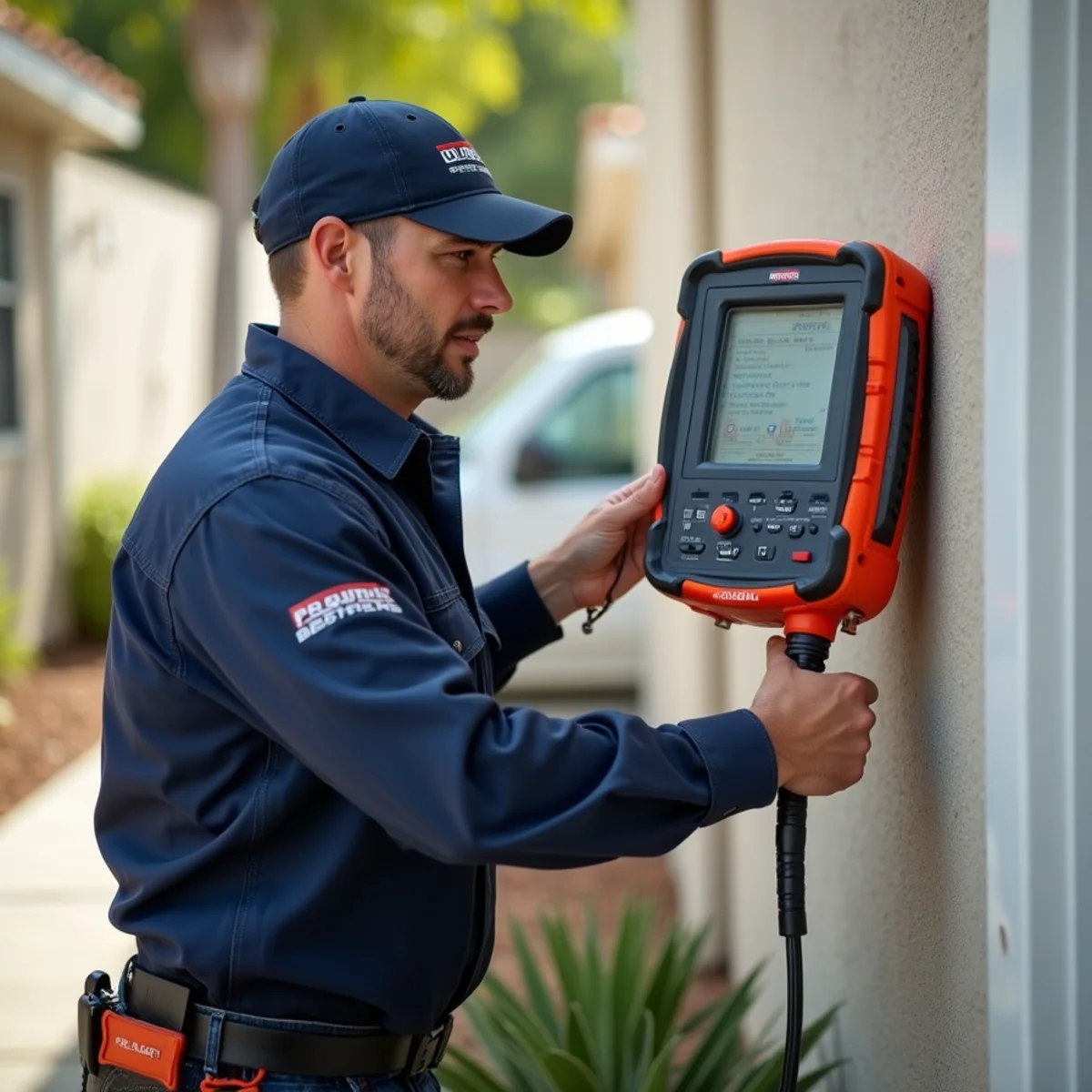
A leak you cannot see still shows up on your water bill. We locate hidden leaks in San Marcos with electronic acoustic detection, thermal imaging, and pressure testing — then repair with the least-invasive method the diagnosis supports.
Hidden leaks waste water, feed mold, and quietly damage framing, drywall, and flooring. The clues are subtle: an unexplained jump in your Vallecitos water bill, a warm spot on the floor, a musty smell, or pressure that drops for no reason. Our San Marcos leak specialists use electronic acoustic equipment, thermal imaging, and pressure testing to pinpoint the source before anyone opens a wall or slab.
Finding the leak precisely is what keeps the repair small. Instead of exploratory demolition, we locate the exact spot, explain what we found, and repair it — a fitting, a section of copper or PEX, or a slab line — with a written scope that separates repair from any restoration.

Signs of a hidden leak
- A water bill that climbed with no change in usage
- The water meter creeping when every fixture is off
- Warm spots on the floor, or damp, discolored drywall
- A musty smell or unexplained mold in one area
- Low water pressure that came on gradually
- The sound of running water inside a wall or under the floor
Our Process
- 1
Verify there is a leak
We use the meter and a pressure test to confirm the system is losing water before we start locating.
- 2
Locate precisely
Acoustic sensors, thermal imaging, and pipe locators narrow the source to a specific spot so the repair stays small.
- 3
Explain the finding
You see where the leak is and learn whether it’s a supply line, drain, slab line, or fixture — and what caused it.
- 4
Repair the least-invasive way
We repair the confirmed section and separate any drywall, flooring, or concrete restoration in writing.
- 5
Re-test
A final pressure or meter check confirms the system holds before we close up.
What’s Included
Every leak detection job with North County Pro Plumbing of San Marcos covers:
- Meter and pressure-test confirmation that the system is actually losing water
- Electronic acoustic listening equipment to hear the leak through walls and slab
- Thermal imaging to spot hot-water leaks and moisture behind finishes
- Pinpoint location so access stays small — a fitting, a section, or a re-route
- Repair with copper or PEX and a final pressure test to confirm it holds
- A separate, written restoration scope so drywall and flooring aren’t a surprise
Why leaks are common in North County homes
Aging copper in 1970s–90s tracts develops pinhole leaks as hard-water chemistry and age take their toll, and expansive clay soils on San Marcos mesa tops shift slab lines. Pressure that runs high without a working regulator stresses joints throughout the house. Because the causes differ, we test rather than guess — a pressure test, fixture inspection, and a look at the pressure regulator tell us whether you have one bad fitting or a system-wide condition.
What Affects the Cost
Leak detection cost in San Marcos depends on access and how much testing the symptom requires. Published San Diego-area estimates list leak detection around $150–$400; the repair itself depends on the pipe, location, and restoration scope.
- How accessible the suspected leak is (open wall vs. slab or ceiling)
- The equipment required — acoustic, thermal, pressure testing, tracer gas
- Repair type: fitting, pipe section, re-route, or slab access
- Whether the finding points to a system-wide issue like high pressure
- Restoration boundaries handled separately from the plumbing repair
Why Choose North County Pro Plumbing for Leak Detection
The difference between a $400 leak repair and a $4,000 one is usually how precisely the leak was found. Cut open the wrong wall and you’ve paid for demolition that fixed nothing. We locate the leak exactly — acoustically, thermally, and by pressure — before anyone opens a wall or slab, then repair the least-invasive way the diagnosis supports. Precision is the whole service.
- Licensed & insured — CA CSLB #1122334 · C-36 Plumbing. Verify us with the CSLB before you sign.
- 60-minute emergency response across North County. We answer 24/7, nights, weekends, and holidays.
- 4.9★ from 138+ North County homeowners. Honest, upfront, no bait-and-switch.
- Written, upfront pricing. You approve the scope and price before non-emergency work begins.
- Local experts since 2009. We know Vallecitos hard water, clay soils, and North County homes.
- Diagnose before we dig. Camera, pressure test, and leak detection confirm the cause — not a guess.
Leak Detection Across San Marcos & North County
We find hidden leaks in aging copper across North County — from 1970s Lake San Marcos homes to Vista slab tracts — without exploratory demolition.
We dispatch from our San Marcos base to homes and businesses in Escondido, Vista, Carlsbad, Encinitas, Oceanside, and Lake San Marcos — plus the backcountry, SW Riverside, and South Orange County. See all service areas →
Leak Detection & Repair FAQs
We use non-invasive tools first — electronic acoustic listening equipment, thermal imaging cameras, and a pressure test — to pinpoint the leak’s location. Only then do we open the smallest possible access to repair it, which keeps both damage and cost down.
Watch for a rising water bill with no usage change, a meter that moves with everything off, warm or damp floors, or a musty smell. Any one of those is worth a leak check before the damage spreads behind walls.
A slow hidden leak can cause mold and structural damage over weeks. EPA guidance recommends drying wet materials within 24–48 hours, so even a modest leak is worth locating and repairing promptly rather than watching it.
Yes, that’s exactly what electronic leak detection is for. A rising bill with no visible water usually means a hidden supply leak — in a wall, under the slab, or in the yard line. We confirm the loss at the meter, then locate the source acoustically and thermally so we repair the exact spot.
Yes. A wet spot, a greener patch of lawn, or a meter that moves with the house valves off can all point to a yard-side or irrigation leak. We use acoustic detection and pressure testing to locate buried supply-line and irrigation leaks so the dig stays small and targeted.