
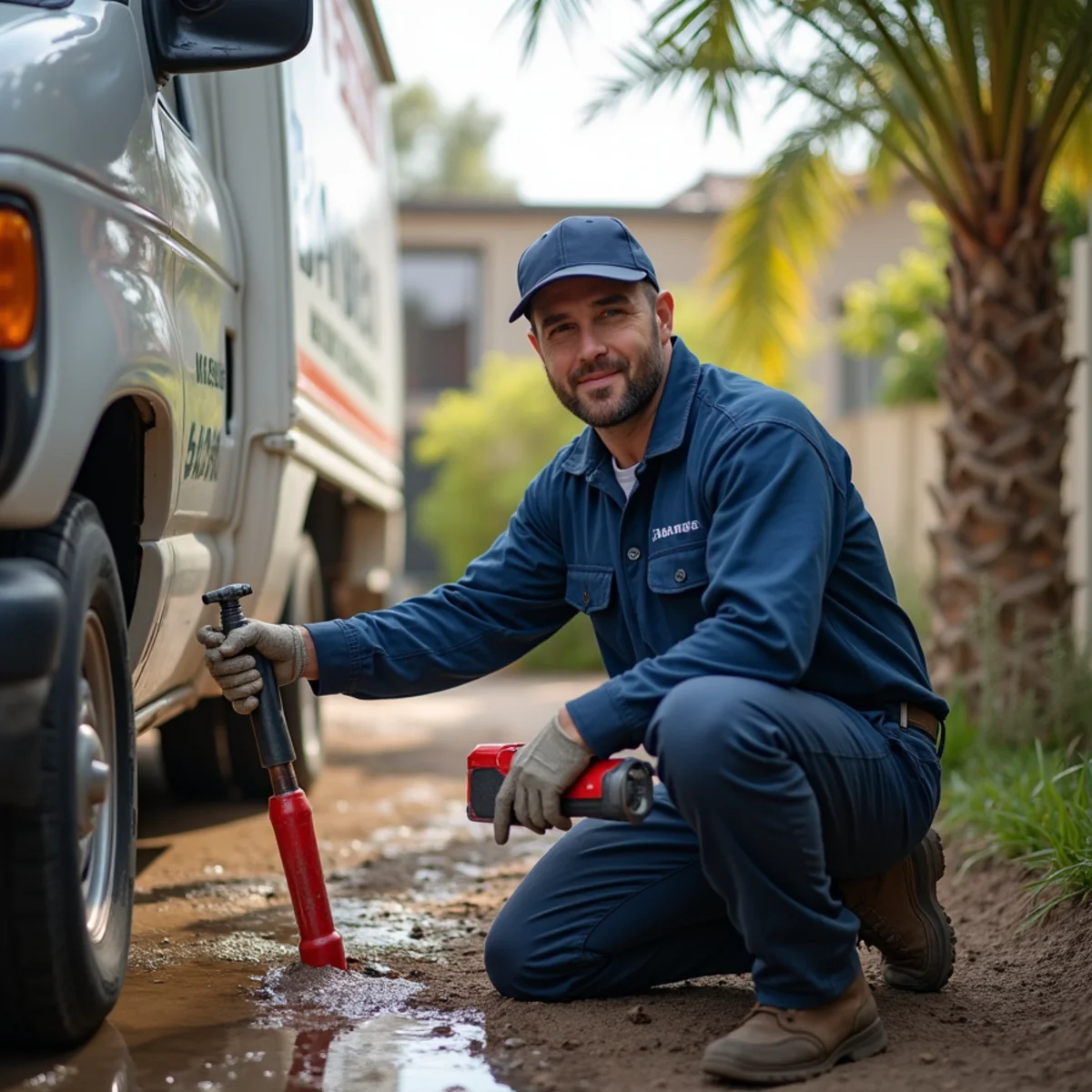
Sewage backing up is a sanitation emergency, not a routine clog. Stop using connected fixtures, keep people and pets away, and call us 24/7 — we clear the blockage, find the cause by camera, and coordinate safe sanitizing.
A sewer backup pushes contaminated water into tubs, showers, and floor drains — the lowest points in the house. Treat it as an urgent sanitation issue: stop using every connected fixture so you don’t add to the backup, keep children and pets away from the wastewater, and call us. Our San Marcos crews respond 24/7 to clear the line and stop the intrusion.
Once the immediate backup is under control, a camera inspection tells us why it happened — roots in the lateral, a collapse or offset in older clay and cast-iron lines, grease and scale buildup, or a city main issue. We fix the cause and coordinate proper sanitizing so your home is safe, not just drained.

Signs of a sewer backup
- Wastewater rising in a tub, shower, or floor drain
- Multiple fixtures backing up when you flush or run water
- Strong sewer odor indoors
- Gurgling from drains and toilets across the house
- Water backing up at the lowest fixture first
- A recurring main-line clog that keeps returning
Our Process
- 1
Stabilize
We confirm you’ve stopped using connected fixtures and keep everyone clear of the contaminated water.
- 2
Clear the main line
We clear the blockage causing the backup to stop the intrusion quickly.
- 3
Camera the cause
A sewer camera reveals whether roots, a collapse, offset, or buildup caused it — and where.
- 4
Repair & sanitize
We fix the confirmed cause and coordinate sanitizing and drying of affected areas.
- 5
Document
We record the cause, work, and cleanup boundaries for your records and any claim.
What’s Included
Every sewer backup cleanup job with North County Pro Plumbing of San Marcos covers:
- Emergency clearing of the main-line blockage to stop the intrusion fast
- Strict stop-use guidance so you don’t add to the backup
- Camera inspection to find the cause — roots, collapse, offset, or grease
- Repair of the confirmed cause so the backup doesn’t recur
- Coordination of sanitizing and drying for contaminated areas
- Documentation of the cause, work, and cleanup boundaries for your records
Why a sewer backup is not a DIY cleanup
A sewage backup is not safe to clean up without appropriate protective controls. The water can carry bacteria and pathogens, so stop using connected fixtures, keep people and pets away, avoid direct contact, and let professionals handle extraction, containment, and sanitizing. Photograph affected areas before cleanup changes the evidence — that record matters for both safety decisions and insurance.
Finding the real cause
Clearing the backup is only half the job. Roots entering weakened joints, offsets and collapses in aging laterals near the lake and Mission Rd, and heavy grease or scale all cause repeat backups if the cause isn’t addressed. Storm-season infiltration can overwhelm marginal lines too. The camera inspection is what separates a one-time clearing from a lasting repair.
What Affects the Cost
Sewer backup cleanup cost depends on clearing the blockage, camera diagnosis, the repair the cause requires, and sanitizing scope. After-hours response may carry a different rate.
- Emergency clearing of the main-line blockage
- Camera inspection to confirm the cause and location
- Repair type — cleaning, spot repair, lining, or replacement
- Sanitizing and drying of contaminated areas
- After-hours or storm-driven emergency timing
Why Choose North County Pro Plumbing for Sewer Backup Cleanup
A sewer backup is a sanitation emergency, not a plunger job, and the mistake we see most is clearing the backup without ever finding why it happened — so it returns. We clear the line to stop the intrusion, then camera it to find the real cause and fix that. We also treat the wastewater as the Category 3 hazard it is, with proper containment and sanitizing rather than a mop and a smile.
- Licensed & insured — CA CSLB #1122334 · C-36 Plumbing. Verify us with the CSLB before you sign.
- 60-minute emergency response across North County. We answer 24/7, nights, weekends, and holidays.
- 4.9★ from 138+ North County homeowners. Honest, upfront, no bait-and-switch.
- Written, upfront pricing. You approve the scope and price before non-emergency work begins.
- Local experts since 2009. We know Vallecitos hard water, clay soils, and North County homes.
- Diagnose before we dig. Camera, pressure test, and leak detection confirm the cause — not a guess.
Sewer Backup Cleanup Across San Marcos & North County
We respond to sewer backups across North County, including storm-season backups where aging laterals near the lake and Mission Rd get overwhelmed.
We dispatch from our San Marcos base to homes and businesses in Escondido, Vista, Carlsbad, Encinitas, Oceanside, and Lake San Marcos — plus the backcountry, SW Riverside, and South Orange County. See all service areas →
Sewer Backup Cleanup FAQs
Stop using every connected fixture immediately so you don’t add to the backup, keep children and pets away from the wastewater, avoid contact, and call us. Photograph the affected areas before any cleanup begins.
Recurring backups usually mean a main-line problem — roots, an offset or collapsed section, or heavy buildup — not just a fixture clog. A camera inspection identifies the cause so we can fix it instead of clearing the same blockage repeatedly.
Yes. Sewage is classified as heavily contaminated (Category 3) water and can carry harmful bacteria. It requires proper protective equipment, containment, and sanitizing — which is why we handle cleanup professionally rather than recommending you mop it up.
Storm infiltration through cracked joints, offsets, or root-damaged sections can overwhelm a marginal line during heavy rain. A camera inspection in dry weather usually reveals the defects letting stormwater in, so we can seal or repair them instead of clearing the same backup every winter.
We don’t recommend it. Even a small backup is Category 3 water that can carry harmful bacteria, and household cleaning won’t properly contain or sanitize it. Stop using connected fixtures, keep people and pets away, photograph the area, and let professionals handle extraction and sanitizing.