That rotten-egg sewer smell indoors has a short list of causes. Here’s how to find it — from a simple dry trap to a real drain or vent problem.
A sewer smell inside your home usually comes from one of three things: a dried-out drain trap letting sewer gas rise, a plumbing vent problem, or an actual drain or sewer-line issue. The good news is the most common cause — a dry trap — is often a two-minute fix. The important part is not ignoring it, because persistent sewer gas can signal a real drain problem.
The usual causes, easiest first
A dried-out trap
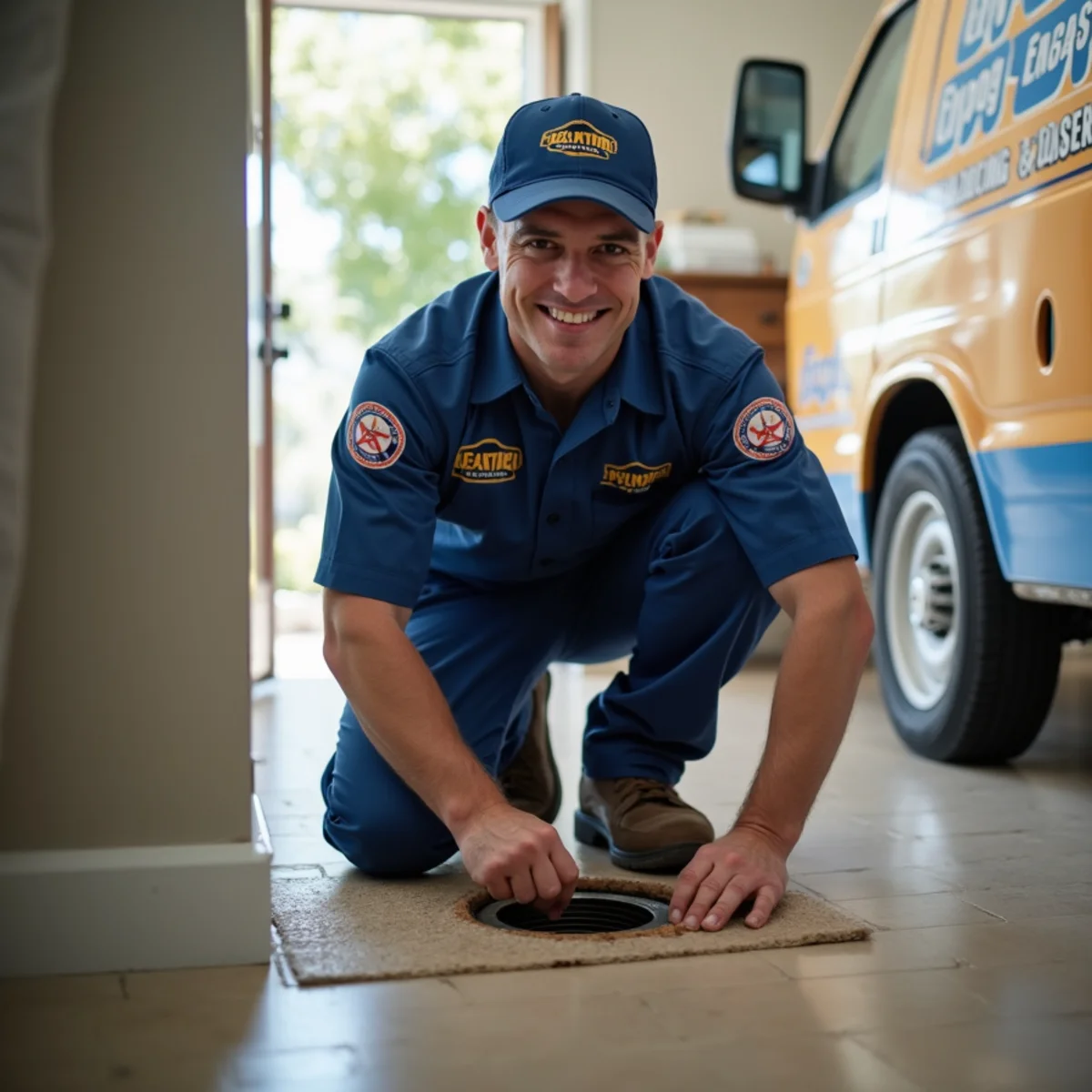
Every drain has a U-shaped trap that holds a little water to block sewer gas. A rarely-used fixture — a guest bathroom, a floor drain in the garage or laundry — can have its trap evaporate, especially in our dry inland climate, letting gas rise. Running water into that drain for a minute refills the trap and usually clears the smell.
A venting problem
Plumbing vents let sewer gas escape through the roof and let drains flow freely. A blocked or damaged vent (debris, a bird’s nest, or a cracked line) can push gas back into the house and cause gurgling drains. This one needs a plumber to diagnose on the roof and in the system.
A drain or sewer-line issue
A partial clog, a cracked drain line, or a problem in the sewer lateral can release odor — often paired with slow drains, gurgling, or recurring backups. In older San Marcos homes near the lake and along Mission Road, aging cast-iron and clay lines are common sources, and a camera inspection pinpoints the spot.
A rotten-egg smell from the hot water only (not the drains) is a different problem — it usually points to the water heater’s anode rod reacting with the water, not a sewer issue. We can confirm which you’re dealing with.
What to check before calling
- Run water into every floor drain and rarely-used fixture to refill dry traps.
- Note whether the smell is constant or comes and goes (and whether it worsens after running water or flushing).
- Check for slow drains or gurgling, which point to a venting or main-line issue.
- Smell at the drains vs. at a hot tap — that tells us sewer vs. water-heater source.
When to call a plumber
If refilling traps doesn’t fix it, or the smell comes with slow drains, gurgling, or backups, it’s time for a professional. We trace the source, check the vents, and camera the drain or sewer line when the symptoms point there — so you fix the actual cause instead of masking the smell.
Why the smell comes and goes
Sewer odor that flares at certain times usually has a pressure or evaporation explanation. It can worsen on windy days or when the HVAC changes the home’s air pressure, pulling gas back through a venting weakness. It can spike after heavy rain if a compromised sewer lateral is involved. And it often appears in a guest bath or garage drain that sits unused, because the trap has slowly evaporated. Noting when the smell is strongest — after rain, when the AC runs, or only in a rarely-used room — gives us a real head start on finding the source quickly.
Frequently Asked Questions
Intermittent sewer smell often means a trap that dries out between uses, letting gas rise until water refills it. It can also flare when wind or pressure changes push gas back through a venting issue. Running water into the drain is the first test.
In small amounts it’s mainly an unpleasant nuisance, but persistent sewer gas shouldn’t be ignored — it can indicate a real drain or vent problem, and in larger concentrations it’s unhealthy. Track down and fix the source rather than covering the smell.
Yes — if the rotten-egg smell is only in the hot water and not at the drains, it’s usually the water heater’s anode rod reacting with the water, which is a separate fix. We can quickly tell which source you’re dealing with.
Related Services & Areas
North County Pro Plumbing of San Marcos
Licensed C-36 plumbing contractor (CA CSLB #1122334 · C-36 Plumbing) serving San Marcos and North County since 2009. This guide is for general information — for a diagnosis specific to your home, call (831) 290-4327.