
San Marcos slab leaks aren’t random — expansive clay soils and hard water are the culprits. Here’s the local story and how we fix them.
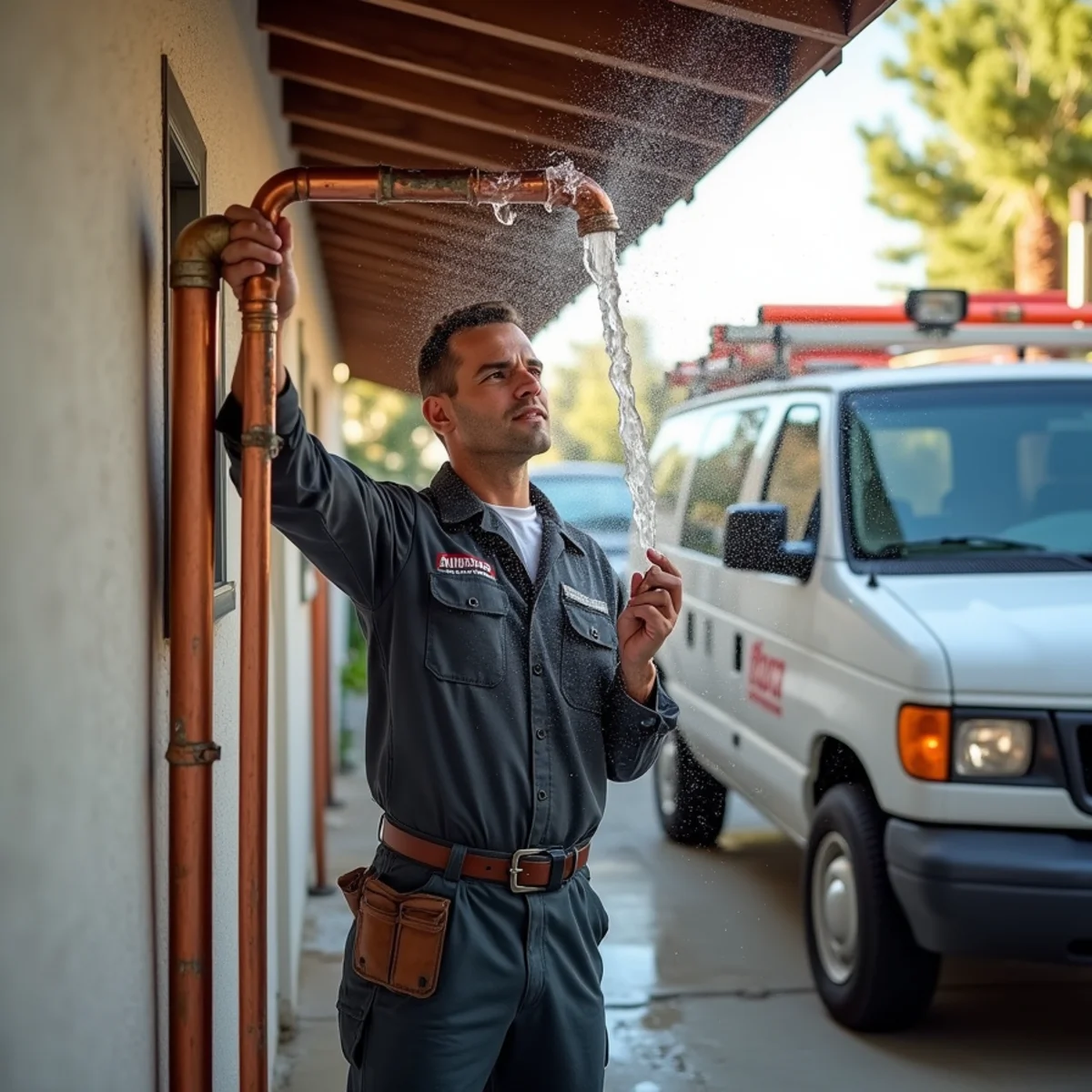
Slab leaks — leaks in pipes under a home’s concrete foundation — are one of the most common serious plumbing problems in San Marcos. And they’re not random bad luck. Two local conditions conspire to cause them: the expansive clay soils on our mesa tops and the hard water running through our pipes.
The clay soil problem
Much of San Marcos sits on expansive clay soils that swell when wet and shrink when dry. As moisture changes with seasons, irrigation, and drought, the soil moves — and so does the slab above it. That movement stresses the copper supply lines run through slab-on-grade foundations, working them until a pinhole or crack forms. It’s a slow, mechanical fatigue that plays out over years.
Hard water makes it worse
On top of soil movement, hard Vallecitos water thins aging copper from the inside through corrosion. High pressure without a working regulator adds strain. Combine expansive soils, corroding copper, and high pressure, and you have the recipe for the slab leaks we see across San Marcos slab-on-grade tracts — and in nearby lake-area homes too.
How to spot a slab leak
- A warm or hot spot on the floor (a hot-water line leak).
- A water bill that jumped with no change in usage.
- The sound of running water when everything is off.
- Low water pressure that developed gradually.
- Cracked flooring, damp spots, or a musty smell.
Precision is everything with slab leaks. We locate them exactly with electronic detection and pressure testing before touching the concrete — so we open a small, targeted area instead of guessing.
Repair, re-route, or repipe?
A single leak in otherwise sound copper is often best handled with a spot repair or a re-route that abandons just the failed segment. But when a home has had multiple slab leaks or the copper is broadly aged, repeatedly opening the slab becomes impractical — a partial or whole-house repipe ends the cycle. We lay out the total costs honestly so you choose with eyes open.
A word on insurance
California homeowners policies often cover the access and damage from a slab leak — the concrete and flooring work — even when the pipe repair itself isn’t covered. We document the leak location and cause thoroughly so you have what you need to file, while being clear that the coverage decision is your insurer’s.
Why precision is the whole job on a slab leak
A slab leak is where a plumber’s equipment and patience earn their keep. We locate it acoustically and thermally and confirm with a pressure test before touching the concrete, because the alternative — opening the slab where the leak “probably” is — means jackhammering a room to find you guessed wrong. Precise location is what lets us open a small, targeted spot, or skip the slab entirely with a re-route through accessible walls or the attic. On the mesa-top clay that drives these leaks, that precision is the difference between a tidy repair and a torn-up floor.
The honest call we make constantly: one leak in otherwise-sound copper is a spot repair or re-route; a second or third leak means the copper is broadly aging, and repeatedly opening the slab stops making sense. That’s when a re-pipe is genuinely the cheaper path.
Frequently Asked Questions
Left alone, it wastes water, can undermine the foundation, and feeds mold. But located precisely and repaired promptly, it’s a manageable problem — the key is not ignoring the early signs like warm floors or a rising bill.
We pinpoint it first with electronic acoustic and thermal detection plus a pressure test, so access is minimal — or we avoid the slab entirely with a re-route through accessible space.
Over time, yes — persistent water under the slab can undermine soil support and contribute to movement, especially in the expansive clay common on San Marcos mesa tops. It also feeds mold and wastes water. Locating and repairing it promptly is what prevents the leak from becoming a structural problem.
A warm or hot spot on the floor is a classic sign of a hot-water slab leak, especially paired with a rising water bill or the sound of running water when everything’s off. It’s worth a detection visit — confirming it with equipment is cheap compared to guessing.
Related Services & Areas
North County Pro Plumbing of San Marcos
Licensed C-36 plumbing contractor (CA CSLB #1122334 · C-36 Plumbing) serving San Marcos and North County since 2009. This guide is for general information — for a diagnosis specific to your home, call (831) 290-4327.